
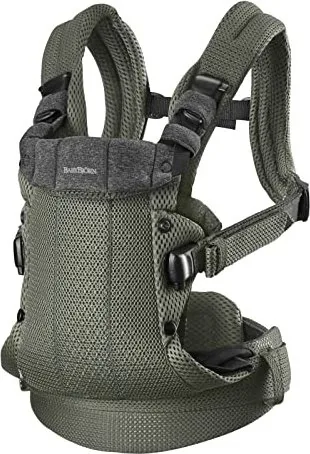
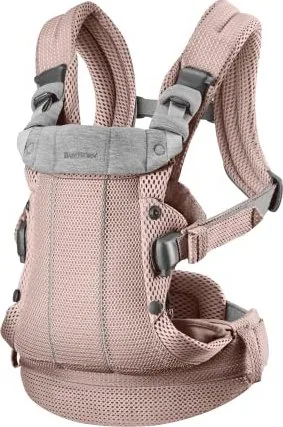
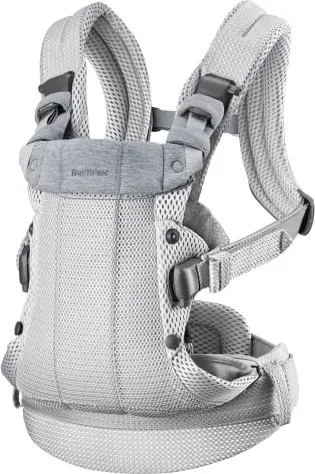
BabyBjorn Harmony Manual
PDF manual · 184 Pages
English


Quick check
Incorrect answer, please try again.
Chat with your BabyBjorn Harmony manual using AI
Get instant AI answers from your BabyBjorn Harmony manual
Ask anything about the BabyBjorn Harmony. Answers come from this manual, with the pages they are based on.
Harmony Maintenance Schedule
Check for ripped seams, torn straps or fabric and damaged fasteners before each use. Stop using if parts are missing or damaged.
Lave separately with lukewarm water and mild detergent on a delicate cycle. Air dry on a clothesline; do not tumble dry, bleach, soften, or iron.
Ask a Question
Do you recommend Harmony?
Yes NoDo you recommend Harmony?
Yes NoFrequently Asked Questions
It can be used from birth when a baby weighs at least 3.2 kg and measures at least 53 cm. Use the newborn configuration, carry the baby facing inward, and position them high enough to kiss the top of their head.
Is this answer helpful?
A child may face outward only when they can hold their head upright without help, typically around five months. Their neck, back, and hips should be strong enough, and the maximum weight in this position is 12 kg.
Is this answer helpful?
Back carrying is intended from approximately 12 months through about 36 months. The child must not exceed 15 kg or 100 cm. Ensure the seat-width zips are fully closed and check the child's position regularly.
Is this answer helpful?
Leg straps reduce the size of the leg openings to help prevent a small baby from slipping through them. They must be used for babies weighing between 3.2 kg and 4.5 kg, with openings fitting snugly around the legs.
Is this answer helpful?
Machine wash it separately in warm water with mild detergent on a gentle cycle. Air dry only. Do not tumble dry, use chlorine bleach or fabric softener, or iron. A wash bag is recommended for machine washing.
Is this answer helpful?
Check all buckles, straps, snaps, adjustments, seams, fabric, and fasteners for security and damage. Keep the child's face unobstructed, ensure room around the nose and mouth, and confirm the child is seated securely.
Is this answer helpful?
Advantages and Disadvantages
Advantages

- Supports facing-in, facing-out, and back carrying as the child grows.
- Adjustable seat, head support, straps, and waist belt help tailor the fit.
- Suitable from 3.2 kg and 53 cm through 15 kg and 100 cm.
- Oeko-Tex Standard 100, Class 1 materials are designed for baby products.
- Machine washable on a gentle cycle and designed to air dry.
Disadvantages

- Facing-out carrying is limited to children who hold their head up unaided and weigh no more than 12 kg.
- Leg straps are required for babies weighing under 4.5 kg.
- Back carrying is recommended only from about 12 months.
- Requires careful adjustment and safety checks before every use.
- Not suitable for sleeping, sports, vehicle travel, cooking, or cleaning near hazards.
Product Specification
Weight class
7.05-33.07 lb
Carrying position
Front/back carrying position
Product Description
BabyBjorn Harmony - Read, Download & Print Free
BabyBjorn Harmony is a versatile baby carrier designed to support everyday closeness from the newborn stage through toddlerhood. It accommodates children from 3.2 kg and 53 cm up to 15 kg and 100 cm, making it a practical choice for families who want one carrier for several developmental stages. Its adjustable design helps parents create a secure, comfortable fit while keeping baby close during walks, quiet moments, and daily routines.
Flexible carrying positions
The carrier supports facing-in carrying from birth, provided the baby meets the minimum size requirements. Newborns should be positioned high on the wearer's chest, close enough to kiss the top of the head. This position helps caregivers monitor breathing and maintain appropriate neck and head support.
When a child can hold their head upright without assistance, usually at around five months, the carrier can be used in a facing-out position. This setting is intended for short periods of exploration and has a maximum child weight of 12 kg. For older children, back carrying becomes available from approximately 12 months, up to 15 kg and 100 cm.
Adjustable support for growing children
BabyBjorn Harmony includes an adjustable seat width, head support, shoulder straps, back yoke, and waist or hip belt. Seat-width zips allow the leg position to be adapted as a child grows. For newborns, the seat zips remain fully closed. Smaller babies weighing under 4.5 kg require leg straps to reduce the size of the leg openings.
A well-adjusted position places the child's knees high while allowing the lower legs to move freely. The head support should be adjusted to support the neck without tightening it excessively. Careful fitting also helps distribute weight across the shoulders, back, and hips for a more comfortable carrying experience.
Safety and care essentials
Before every use, check that buckles, straps, fasteners, seams, and fabric are secure and undamaged. Keep the child's face visible and free from obstruction, with clear space around the nose and mouth. The carrier is intended for walking, sitting, or standing only, and should not be used for sleeping, sports, cooking, cleaning near heat or chemicals, or travel in a motor vehicle.
The main material is polyester, with additional polyester, cotton, and elastane components. Materials meet Oeko-Tex Standard 100, Class 1 criteria for baby products. For care, machine wash separately on a warm, gentle cycle using mild detergent, then air dry. Do not tumble dry, bleach, use fabric softener, or iron.
Notes
- Always carry infants facing inward until they can hold their head upright unaided.
- Consult a health professional before use for low-birthweight babies or children with medical conditions.
- Regular fit checks are especially important during back carrying.
Search for 67,732 Manuals online


Type-in Brand or Model