
Atika RL 1600 G Manual
PDF manual · 120 Pages
English



Quick check
Incorrect answer, please try again.
Chat with your Atika RL 1600 G manual using AI
Get instant AI answers from your Atika RL 1600 G manual
Ask anything about the Atika RL 1600 G. Answers come from this manual, with the pages they are based on.
Ask a Question
Do you recommend RL 1600 G?
Yes NoFrequently Asked Questions
It is intended for DIY mixing of materials such as paints, varnishes, mortar, adhesives, plaster, grouting compounds, fillers, coating materials, cement, lime, concrete, and screed. The supplied beater is suitable for liquid through heavy consistencies.
Is this answer helpful?
The mixer uses a 1600 W, 230 V, 50 Hz AC motor. This power rating is intended for mixing demanding building materials rather than light household stirring tasks.
Is this answer helpful?
Yes. The RL1600G has a six-level speed control. The mortar beater operates at about 290 to 480 rpm and the disc beater at about 380 to 620 rpm. Begin at low speed, then increase speed as the mixture develops.
Is this answer helpful?
Only beaters intended for this machine should be used. The maximum permitted beater diameter is 140 mm. The specified attachments include a 140 mm mortar beater and a 114 mm disc beater with an M18 connection.
Is this answer helpful?
The stated mixing volume is approximately 90 litres. Actual capacity depends on the density, consistency, container size, and processing instructions for the material being mixed.
Is this answer helpful?
Wear safety glasses, hearing protection, protective gloves, and a dust mask. Keep both hands on the tool while mixing, avoid contact with the rotating beater, and disconnect the plug before cleaning, maintenance, or adjustments.
Is this answer helpful?
Advantages and Disadvantages
Advantages

- 1600 W motor provides strong mixing performance for mortar, plaster, cement, paint, adhesive, and fillers.
- Six-level variable speed control helps match mixing force to material consistency and reduces splashing at startup.
- Counter-rotating action and up to 90 litre mixing capacity support efficient preparation of larger batches.
- Double-insulated design, trigger lock, and two-handed operation support controlled use.
- Uses M18 attachments and supports approved beaters up to 140 mm in diameter.
Disadvantages

- At approximately 5.5 kg, the mixer may feel heavy during extended overhead or continuous work.
- The tool is not designed for continuous operation at low speed because motor cooling may be insufficient.
- It is unsuitable for drilling, grinding, polishing, engraving, food use, or flammable materials.
- Hearing, eye, hand, and dust protection are needed because of noise, rotating parts, and construction dust.
- Carbon brushes and mixing attachments require periodic inspection and replacement when worn.
Product Specification
Power
1,600 W (230 V)
No-load speed
290-480/380-620 rpm
Mixing paddle diameter
5.51 in
Tool holder
M18 spindle thread
Features
Speed control, multi-speed, auxiliary handle, soft grip
Weight
12.13 lb
Package contents
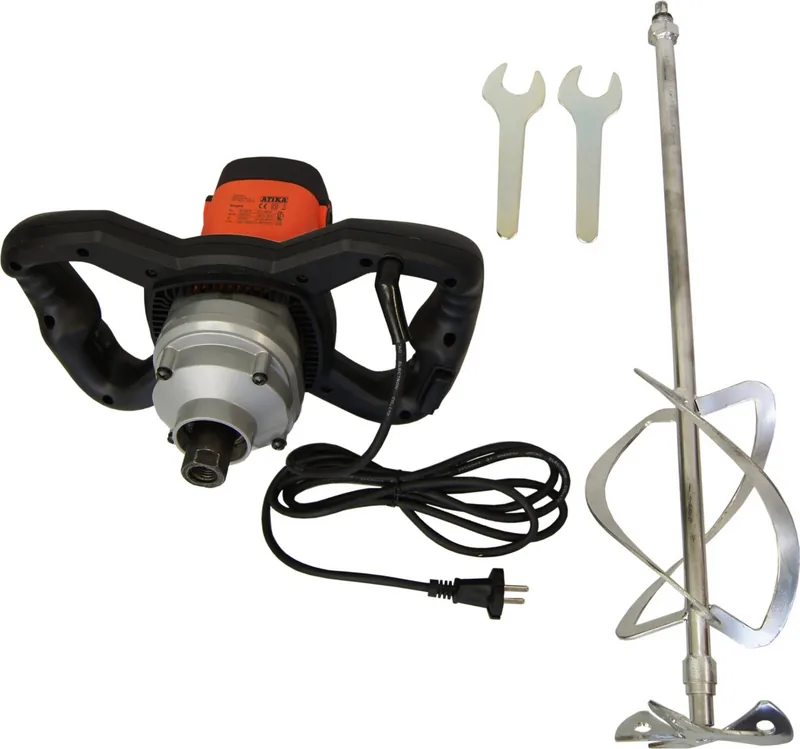
Mixing paddle
Product Description
Atika RL1600G Electric Mixer - Read, Download & Print Free
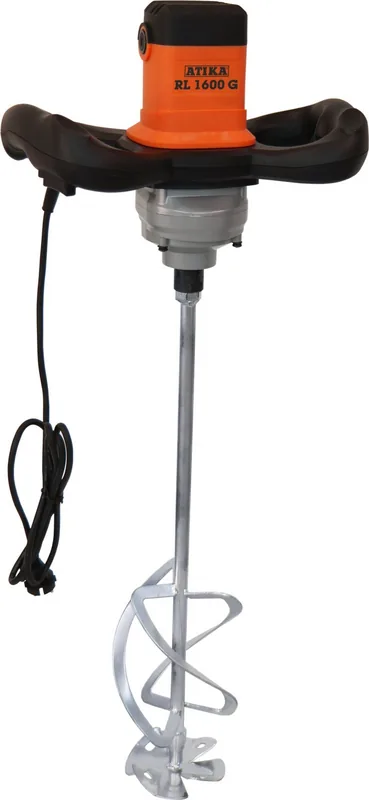
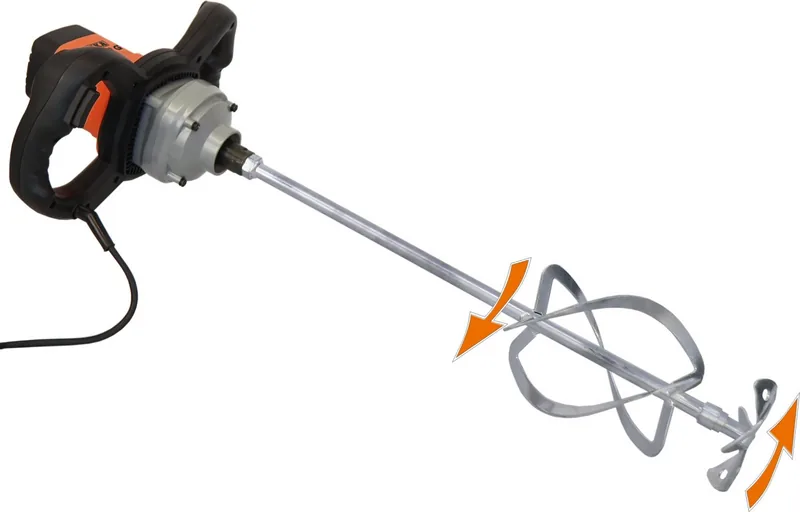
The Atika RL1600G Electric Mixer is a practical handheld agitator designed for demanding DIY mixing jobs. Powered by a 1600 W motor, it is built to blend a wide range of liquid, thick, and heavy building materials, including paint, varnish, mortar, adhesive, plaster, filler, cement, lime, concrete, and screed. Its counter-rotating mixing action supports thorough blending while helping users achieve a more consistent material texture.
This mixer is suited to renovation, decorating, tiling, and construction preparation tasks where manually mixing large batches would take considerable time and effort. With an approximate mixing capacity of 90 litres, the RL1600G can support substantial projects while remaining portable at about 5.5 kg. The included beater is intended for materials ranging from fluid to dense consistency, making the tool a versatile addition to a home workshop.
Adjustable Mixing Performance
A variable speed control provides six levels of adjustment, allowing the operator to begin slowly and increase speed as the material combines. The mortar beater operates at approximately 290 to 480 rpm, while the disc beater reaches approximately 380 to 620 rpm. Starting at a low setting is especially useful when placing the beater into a container or removing it, as it helps reduce splashing.
The machine uses an M18 beater connection and accepts manufacturer-approved beaters up to 140 mm in diameter. A 140 mm mortar beater and a 114 mm disc beater are specified for this model. Secure two-handed handling, a trigger lock, and an on-off grip switch contribute to controlled operation during mixing.
Safety and Care Considerations
The Atika RL1600G Electric Mixer is double insulated and should be connected through a 30 mA residual-current device. Eye protection, hearing protection, gloves, and a dust mask are recommended, particularly when handling cement or powdered additives. Users should keep the work area clear of children, pets, and bystanders, and always disconnect the power before cleaning, maintenance, transport, or inspection.
Routine care is straightforward: keep ventilation slots clear, remove dust with a soft cloth or brush, clean the beater after use, and inspect the shaft and mixing attachment for wear or damage. Carbon brushes should be replaced in pairs once worn to around 4 mm. Avoid continuous low-speed operation, which may reduce cooling and overload the motor.
Notes
- Use only suitable mixing attachments and never exceed the 140 mm maximum diameter.
- Do not use the mixer as a drill, polishing tool, grinder, or food-processing appliance.
- Never mix flammable or explosive substances with this tool.
- Store the cleaned mixer in a dry, locked location away from children.
Search for 67,706 Manuals online


Type-in Brand or Model