
Atika ASP Manual
PDF manual · 6 Pages
English



Quick check
Incorrect answer, please try again.
Chat with your Atika ASP manual using AI
Get instant AI answers from your Atika ASP manual
Ask anything about the Atika ASP. Answers come from this manual, with the pages they are based on.
Ask a Question
Do you recommend ASP?
Yes NoFrequently Asked Questions
It is intended for straight-cut, debranched logs measuring 560 to 1040 mm in length and approximately 100 to 300 mm in diameter. Remove nails, wire, and all metal objects first. Dry seasoned wood is recommended because it splits more easily than green wood.
Is this answer helpful?
The range includes the ASP 10 TS-2, ASP 12 TS-2, and ASP 14 TS-2. Their rated splitting forces are 10, 12, and 14 tonnes respectively. The models share the same general vertical splitting design while differing in output, hydraulic specifications, and weight.
Is this answer helpful?
Yes. These models use a 400 V three-phase, 50 Hz electrical supply. Use a correctly rated, properly grounded connection with a 30 mA residual-current device. Extension leads must meet the stated specification and should not exceed 10 m.
Is this answer helpful?
The right control handle adjusts the balance between speed and force. Its middle position provides maximum splitting force at a lower speed for hard or seasoned wood. The lower position gives faster movement with lower force for normal logs or the final part of a split.
Is this answer helpful?
Check that assembly is complete, fasteners are tight, cables are undamaged, hydraulic hoses and fittings do not leak, oil level is correct, and controls function properly. Vent the hydraulic system before use and verify motor rotation direction on three-phase units.
Is this answer helpful?
Switch the splitter off and disconnect it from the power supply. Do not use your hands, strike the log with a hammer, saw it out, or ask another person to assist. Carefully work the log loose with a crowbar while avoiding damage to the splitting column.
Is this answer helpful?
Advantages and Disadvantages
Advantages

- Three models offer 10, 12, or 14 tonnes of splitting force for different firewood workloads.
- Handles logs from 560 to 1040 mm long and 100 to 300 mm in recommended diameter.
- Two-speed hydraulic control balances high force for hard logs with faster splitting for normal wood.
- Log lifter, fixing claw, adjustable return stroke, and transport wheels improve everyday handling.
- Two-hand, one-person controls and restart protection support safer operation.
Disadvantages

- Requires a 400 V three-phase electrical supply, which may not be available at every home.
- Heavy construction, from 172.5 to 184.9 kg, can limit portability despite transport equipment.
- Only straight-cut, debranched logs without nails, wire, or metal are suitable.
- Hydraulic venting, lubrication, inspections, and scheduled oil changes are essential maintenance tasks.
- Green, very knotty, oversized, or extremely hard wood may jam or split poorly.
Product Specification
Features
Two-hand safety operation, transport wheels
Product Description
Atika ASP Electric Wood Splitter - Read, Download & Print Free
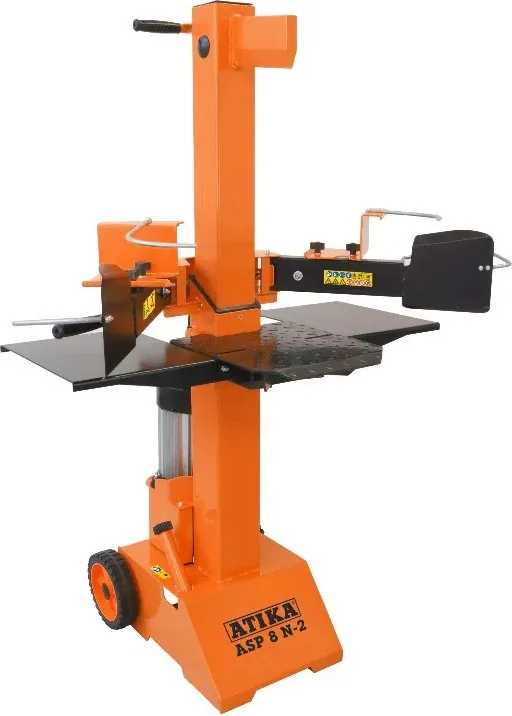
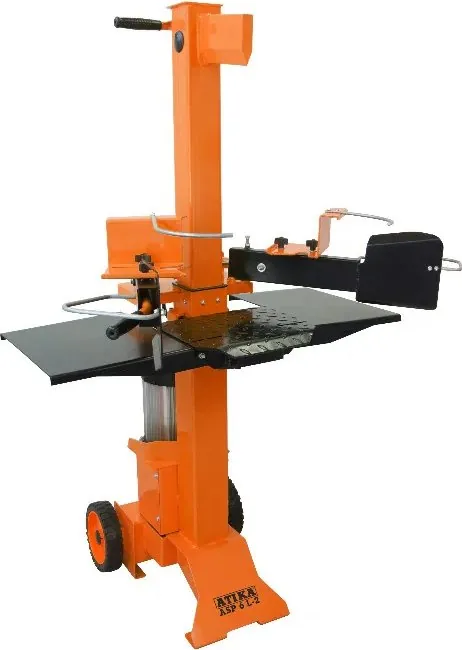
The Atika ASP Electric Wood Splitter range is designed for homeowners and serious hobby users who want a dependable way to prepare firewood. Available in ASP 10 TS-2, ASP 12 TS-2, and ASP 14 TS-2 versions, these vertical electric log splitters provide 10, 12, or 14 tonnes of splitting force for demanding seasonal wood processing.
Powerful splitting for prepared firewood
Each model uses a 400 V three-phase electric motor and a hydraulic system to split straight-cut logs safely and efficiently. The machines accept logs from 560 to 1040 mm long, with a recommended diameter between 100 and 300 mm. Dry, seasoned wood is the preferred material because it splits more easily and is less likely to jam than green wood.
The adjustable two-speed operation helps match the machine's output to the timber. A slower setting provides higher splitting force for tough, knotty, or well-seasoned logs, while the faster setting is suited to ordinary wood and the final stage of a split. This balance can make regular firewood preparation more controlled and productive.
Practical features for safer handling
The Atika ASP Electric Wood Splitter is built for one-person operation and uses two-hand controls to keep the operator away from the moving splitting blade. A fixing claw helps hold the log in position, while the log lifter supports the loading of larger and heavier pieces. The return lever brings the blade back to its upper position after each cycle.
For shorter logs, the return stroke can be adjusted to reduce unnecessary travel time. Transport wheels, a drawbar, and a transport support wheel assist with moving the splitter around a suitable work area. The work surface should be level, dry, clear of obstacles, and well lit.
Care and operating essentials
Before use, the hydraulic system must be vented by loosening the oil cap, and the motor rotation direction must be checked on three-phase models. Users should inspect cables, hoses, fittings, oil level, controls, and safety equipment before every session. The machine should be connected through a 30 mA residual-current device and used with an appropriate cable.
Routine care includes cleaning away resin and debris, lubricating the splitting column, checking for hydraulic leaks, and maintaining the oil level. The first hydraulic oil change is recommended after 50 operating hours, followed by changes every 500 hours. Always disconnect power before cleaning, adjustment, maintenance, transport, or storage.
Notes
Wear eye protection, hearing protection, gloves, long trousers, and safety footwear. Keep other people and animals at least 5 m from the work area. Never split logs containing nails, wire, or other metal objects, and never remove a jammed log by hand.
Search for 67,706 Manuals online


Type-in Brand or Model