
AquaForte AP Series Manual
PDF manual · 8 Pages
English



Quick check
Incorrect answer, please try again.
Chat with your AquaForte AP Series manual using AI
Get instant AI answers from your AquaForte AP Series manual
Ask anything about the AquaForte AP Series. Answers come from this manual, with the pages they are based on.
Ask a Question
Do you recommend AP Series?
Yes NoFrequently Asked Questions
The AP-Series is suitable for aquarium and pond aeration, aquaculture, air mattresses, vacuum packaging, certain medical devices and some industrial uses that require steady, oil-free compressed air.
Is this answer helpful?
Air stones should be no deeper than 3 meters below water level. Deeper placement or excessive tubing resistance can overload the pump, reduce airflow and cause overheating or damage.
Is this answer helpful?
Filter sponges should be cleaned or replaced as soon as they’re dirty; heavy soiling warrants replacement. Diaphragms are wear items and are recommended to be replaced about once per year or whenever you detect reduced performance or abnormal noise.
Is this answer helpful?
Install the pump above the waterline or fit a non-return valve on the outlet to prevent backflow. Create a drip loop in the power cord, keep the pump dry and never place the unit in water.
Is this answer helpful?
Immediately unplug the pump, inspect tubing, air stones and the inlet filter for blockages or dirt. If no clear cause is found, stop use and contact your dealer or an authorized service center for inspection and repair.
Is this answer helpful?
Use only identical, model-specific replacement diaphragms that fit the air chamber precisely. For filters, use the correct sponge size and ensure thorough rinsing and drying if cleaning before reinstalling.
Is this answer helpful?
Use the voltage and frequency specified on the product nameplate (e.g., AP-Series models typically list 220–240V, 50Hz). Ensure your outlet matches to avoid damage or unsafe operation.
Is this answer helpful?
Advantages and Disadvantages
Advantages

- Low-noise operation with double damping and noise-absorption for quiet aeration.
- Energy-efficient, oil-free diaphragms deliver clean air suitable for aquaria and medical/industrial uses.
- Multiple models cover flows from 35 to 250 L/min to suit small tanks to large ponds.
- Splash-proof aluminum housing and rapid heat dissipation enhance durability.
- Clear maintenance procedures (filter cleaning, diaphragm replacement) support long service life.
Disadvantages

- Must be installed above water or with check valve to avoid water ingress; never submerge.
- Performance drops if tubing is kinked, air stones are too deep/dirty, or outlet is restricted.
- Diaphragms are wear parts requiring periodic replacement (annual recommended).
- Larger models produce higher dB levels and require more power and space.
- Power-cord damage requires manufacturer or qualified technician replacement.
Product Specification
Area
Oxygenation
Type
Air pump
Suitability
Freshwater, Saltwater, Aquatics, Terrariums, Garden pond
Product Description
AquaForte AP-Series Air Pump for Aquariums and Ponds
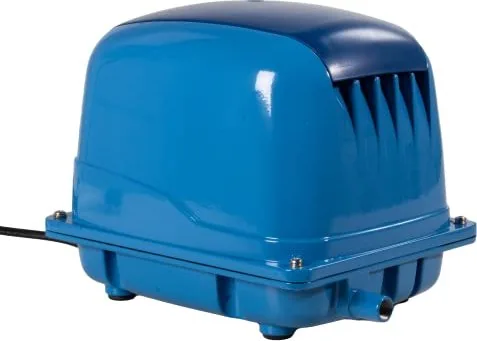
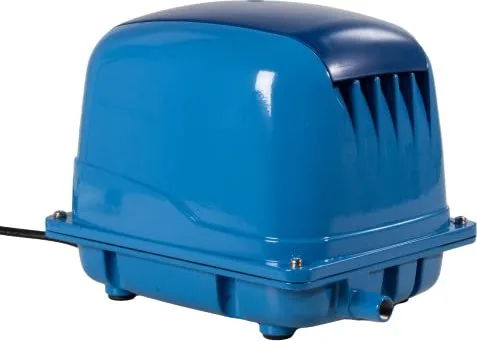
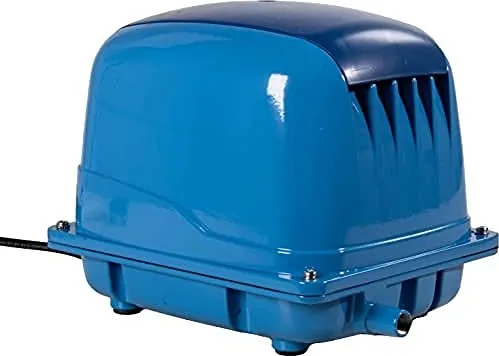
The AquaForte AP-Series air pumps deliver quiet, energy-efficient aeration designed for aquariums, garden ponds, aquaculture and various industrial or household uses such as air mattresses, vacuum packaging and medical equipment. Built with a high-grade aluminum alloy housing, double damping and noise-absorption systems, these pumps emphasize long life, low noise and consistent performance.
Key Features and Design
AquaForte AP pumps use a dual-air-chamber, oil-free diaphragm design that maximizes airflow and pressure while maintaining pure, contaminant-free air. Their electromagnetic coil-and-rod mechanism vibrates at mains frequency to drive the diaphragms, producing a steady intake and exhaust cycle. The housings are splash-proof and optimized for rapid heat dissipation to protect internal components.
Models range from compact AP-35 units (35 L/min, 20 W) up to heavy-duty AP-200 (250 L/min, 180 W), with increasing maximum head pressures and slightly higher noise levels at larger sizes. Typical install guidance limits air stone placement to no deeper than 3 meters to avoid overloading the pump.
Installation & Operation Tips
Use appropriately sized tubing (9 mm or larger recommended), secure connections with clips, and avoid sharp bends or kinked lines. Never fully close the pump outlet — restricted airflow can overheat and damage the unit. Install above water level or fit a non-return valve to prevent backflow; never place the pump in water. Protect the unit from moisture, dust and temperatures above 40°C to avoid diaphragm damage.
Maintenance
Periodic maintenance extends service life: clean or replace the inlet filter sponge regularly, inspect and replace diaphragms annually or when wear is noticed, and follow the step-by-step diaphragm replacement procedure (power off, remove screws, disassemble air chamber, replace membrane with identical part, reassemble). Replace damaged power cords only through the manufacturer or qualified service.
Safety Notes
Always match the pump to the indicated voltage and frequency, ground the unit while in use, unplug before any maintenance, and never pull or carry the pump by its power cord. If the pump falls into water, unplug first and have it inspected by a technician. Dispose of the unit via appropriate electronic waste recycling channels.
Notes
- Choose air stones and tubing sized to your installation to preserve pump life.
- Install a drip loop on the power cord to prevent water ingress at the outlet.
- Keep spare diaphragms and filter sponges on hand for timely maintenance.
Search for 67,706 Manuals online


Type-in Brand or Model