

Ansmann Energy 16 Plus Manual
PDF manual · 60 Pages
English



Quick check
Incorrect answer, please try again.
Chat with your Ansmann Energy 16 Plus manual using AI
Get instant AI answers from your Ansmann Energy 16 Plus manual
Ask anything about the Ansmann Energy 16 Plus. Answers come from this manual, with the pages they are based on.
Ask a Question
Do you recommend Energy 16 Plus?
Yes NoFrequently Asked Questions
It is designed only for NiMH and NiCd rechargeable batteries. It supports AAA, AA, C, D, and rechargeable 9V batteries. Do not insert alkaline, disposable, or other battery chemistries because they may create an explosion or damage risk.
Is this answer helpful?
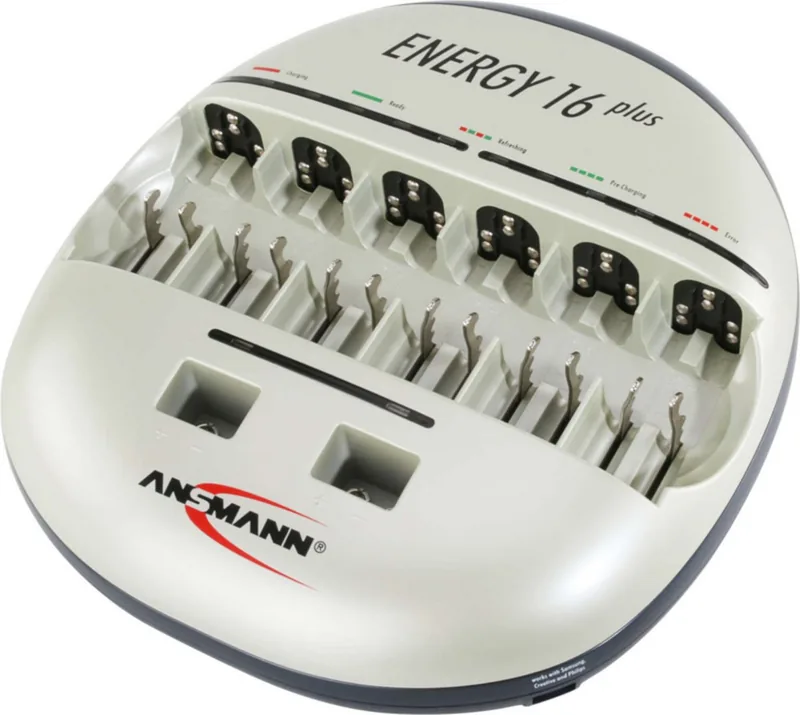
The charger can handle up to 12 AAA cells or 12 AA cells, up to six C or D cells, and one or two 9V rechargeable batteries. Its six dual bays let users combine suitable cylindrical battery sizes based on available space.
Is this answer helpful?
For about 10 seconds after insertion, green indicates more than 80 percent of nominal capacity, orange indicates 25 to 80 percent, and red indicates less than 25 percent. The charger then automatically selects a suitable charging mode.
Is this answer helpful?
After full-charge detection, the charger automatically switches to pulse trickle charging. This maintenance mode helps counter self-discharge, allowing rechargeable batteries to remain in the charger until they are needed.
Is this answer helpful?
Yes. The Energy 16 Plus can charge NiMH and NiCd rechargeable batteries at the same time. Individual slot monitoring helps the charger manage each inserted battery separately.
Is this answer helpful?
A flashing red LED signals an error condition. It may mean that the inserted battery is faulty or that the charger has detected an alkaline, non-rechargeable battery. Remove the battery and verify that it is a compatible NiMH or NiCd cell.
Is this answer helpful?
Advantages and Disadvantages
Advantages

- Charges up to 12 AAA or AA cells, six C or D cells, and up to two 9V rechargeable batteries.
- Independent monitoring allows batteries with different capacities and charge levels to be handled together.
- Automatic pre-charge, refresh, fast-charge, and trickle-charge modes support ongoing battery care.
- Color-coded LEDs provide quick capacity readings and clear charging-status feedback.
- Two 5V/1000mA USB ports add charging support for compatible USB devices.
Disadvantages

- Compatible only with NiMH and NiCd rechargeable batteries; alkaline and other chemistries are unsafe.
- High charging currents require quality, fast-charge-capable rechargeable batteries.
- USB port compatibility can vary, so a connected device may need to be moved to the second port.
- The charger is intended for dry indoor use and must be protected from moisture.
- C and D batteries use more space, reducing the number of cells that can be charged simultaneously.
Product Specification
Compatibility
AA, AAA, C, D, 9V battery
Charging slots
12x cylindrical cells (12x AA, 12x AAA, 6x C, 6x D), 2x 9V batteries
Charging current
60-1,000 mA
Special features
USB output
Product Description
Ansmann Energy 16 Plus - Read, Download & Print Free
The Ansmann Energy 16 Plus - Read, Download & Print Free guide introduces a versatile desktop charger designed for households, workshops, and anyone who relies on rechargeable batteries across several devices. It supports NiMH and NiCd rechargeable cells in common AAA, AA, C, D, and 9V formats, allowing a wide range of batteries to be managed from one practical charging station.
Flexible charging for everyday battery collections
With six dual charging bays, the Energy 16 Plus can charge up to 12 AAA or AA cells, up to six C or D cells, and one or two 9V rechargeable batteries. NiMH and NiCd cells may be charged at the same time. Each charging position is monitored independently, helping users charge batteries with different capacities and charge levels without needing to match them in sets.
The charger begins automatically once batteries are inserted correctly. A brief capacity check uses colored LEDs to show the approximate charge level: green indicates over 80 percent, orange indicates 25 to 80 percent, and red indicates less than 25 percent. This immediate feedback makes it easier to identify which batteries need attention.
Smart battery care and clear status information
Microprocessor-controlled charging selects an appropriate process for each battery. Long-stored cells can receive gentle pre-charging, while the refresh mode is intended to support battery maintenance before fast charging begins. Full-charge detection then changes the process to pulse trickle charging, helping reduce self-discharge while batteries remain in the charger.
The multicolor LED display also communicates the current mode. Flashing green indicates pre-charging, flashing red and green indicates refreshing, solid red signals charging, and solid green means the battery is ready. A flashing red light warns that a faulty battery or a non-rechargeable alkaline battery may have been detected.
USB charging and safety considerations
Two 5V, 1000mA USB charging ports add convenience for compatible USB-powered devices such as phones and media players. The ports are wired differently for broader device compatibility, so users can try the alternate port if charging does not begin.
Built-in safeguards include reverse-polarity protection, individual slot monitoring, overcharge protection, and defective-cell or alkaline-battery detection. The universal 100-240V input supports use in many regions with a suitable mains connection. Only quality NiMH or NiCd rechargeable batteries should be used; alkaline and other battery chemistries must never be inserted.
Notes
- Use the charger indoors in a dry location.
- Keep battery and charger contacts clean with a dry cloth only.
- Batteries may become warm during charging, which is normal.
- Disconnect the unit from mains power before cleaning.
Search for 67,706 Manuals online


Type-in Brand or Model
Vita Mante
4 months ago
Can I leave rechargeable batteries in the charger after they are fully charged, and does it show weak batteries?
Manual.ly
4 months ago
Yes. The charger is designed to maintain inserted rechargeable batteries after charging, so they can remain ready for use. Its LED indicators also help identify batteries that no longer charge fully or may be reaching the end of their service life. Please note that long-term durability may vary, as one reviewer reported individual charging slots failing after several years.