
Amica KS 361 110 E Manual
PDF manual · 172 Pages
English



Quick check
Incorrect answer, please try again.
Chat with your Amica KS 361 110 E manual using AI
Get instant AI answers from your Amica KS 361 110 E manual
Ask anything about the Amica KS 361 110 E. Answers come from this manual, with the pages they are based on.
KS 361 110 E Maintenance Schedule
Defrost the appliance at least once or twice a year. If ice build-up is higher, defrost more frequently.
Clean dust off the air vents once or twice a year to ensure adequate ventilation.
Wash the refrigerator and freezer compartments at least once a year to prevent odors and bacteria.
Free maintenance reminders
Timed to your purchase date. Always free, unsubscribe anytime.
Ask a Question
Do you recommend KS 361 110 E?
Yes NoFrequently Asked Questions
Use the thermostat dial positions: OFF/0 to switch off, 1 for the warmest, and 7 for the coldest. The manual notes that the right setting depends on ambient temperature, sun exposure, door-opening frequency, and how full the chambers are. In many cases, the middle setting is a good start.
Is this answer helpful?
The manual advises against manually adjusting for seasonal changes. Instead, the appliance detects ambient temperature changes and the compressor runs longer when needed to maintain the set temperature. Minor fluctuations are normal, especially when loading fresh food or leaving the door open for longer periods.
Is this answer helpful?
Allow at least 4 hours for the appliance to reach operating temperature before loading food. This helps ensure proper cooling and reduces the risk of uneven temperatures while the system stabilizes.
Is this answer helpful?
Defrosting depends on the compartment system and frost buildup. The manual describes that the fridge may defrost automatically, though frost can appear on the rear wall. The freezer should be defrosted at least once or twice per year, and more often if ice accumulates heavily.
Is this answer helpful?
Check whether the water discharge opening is clogged. The manual recommends cleaning the opening and also ensuring internal airflow is not blocked. Make sure food and containers are arranged so they do not touch the rear wall and obstruct circulation.
Is this answer helpful?
No. The manual explicitly warns against refreezing partly thawed products. For best quality and safety, store and freeze food based on original packaging and proper temperature control, and avoid interrupting the freezing cycle.
Is this answer helpful?
First check the appliance power and then inspect the bulb type used in your model. The manual notes common causes like a loose or fused bulb. Replace only with the correct specified bulb parameters (E14 thread) and unplug before changing the light source.
Is this answer helpful?
Advantages and Disadvantages
Advantages

- Clear thermostat guidance (OFF/0 to 1-7) and advice on choosing settings based on room conditions.
- Practical storage rules: avoid touching the rear wall, manage odors with sealed containers, and follow temperature zones.
- Freezing recommendations for packaging, portioning, and organizing frozen vs fresh items to protect quality.
- Comprehensive maintenance safety: unplug before cleaning, use mild detergents, and avoid unsafe defrost sprays.
Disadvantages

- The freezer may require periodic manual defrosting, increasing routine effort if frost builds up.
- Setup and use depend on strict electrical and placement rules (proper earthing, no adapters, ventilation spacing).
- You must follow food restrictions (no refreezing partly thawed items, avoid storing certain cold-sensitive produce).
- Lighting and some maintenance tasks require correct bulb specifications and safe access procedures.
Product Specification
Design type
Freestanding appliance
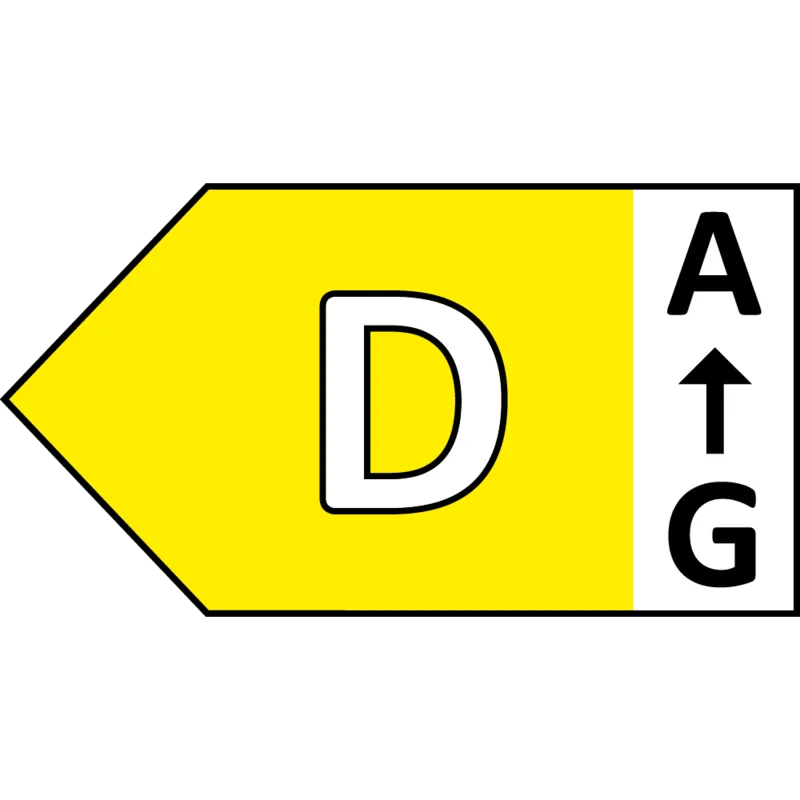
Energy efficiency class
E (A to G)
Old energy efficiency class
A++ (A+++ to D)
Energy consumption
137kWh/year
Old energy consumption
131kWh/year
Front color
stainless steel (inox-look)
Net capacity refrigerator compartment
3.35 cu ft
Net capacity freezer compartment
0.46 cu ft
Total net capacity
3.81 cu ft
Star rating
4
Freezing capacity in 24h
4.41 lb
Storage time during power failure
8h
Display
no
Special features
Vegetable compartment
Climate class
ST
Noise level
37dB(A)
Airborne acoustical noise emission class
C (A to D)
Door system
Right-hand door hinge, reversible
Dimensions
21.65x33.27x24.21in (WxHxD)
Product Description
Amica KS 361 110 E: Practical Guide for Safer, More Efficient Cooling
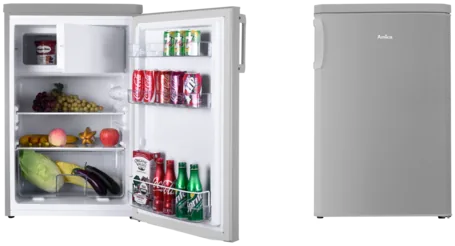
If you want reliable day-to-day performance, the Amica KS 361 110 E Manual keyword is your shortcut to the essentials: safe household use, correct setup, simple temperature control, and maintenance routines that help protect food quality. This refrigerator-freezer is designed for keeping fresh items in the fridge compartment and freezing them in the freezer chamber, with guidance covering everything from installation distances to daily storage habits.
Smooth setup and safe start
Before first use, focus on placement and ventilation. The manual recommends a flat, stable surface, correct leveling with adjustable front legs, and free air circulation on all sides. Keep the appliance away from heat sources like ovens, radiators, and hot-water installations, using the stated minimum distances. For electrical safety, connect only to the specified AC voltage with proper earthing and the required fuse, and avoid adapters and multi-sockets.
If the unit was transported and tilted more than 40 degrees, wait at least 2 hours before switching it on. After unpacking, remove protective elements, clean the interior, and confirm the door can open freely with the correct clearance.
Temperature control that makes sense
The thermostat dial (OFF/0, then levels 1 to 7) determines the interior temperature. The manual highlights that performance depends on ambient temperature, sun exposure, door-opening frequency, and how much food is stored. In most situations, the middle setting is optimal. Avoid loading the fridge-freezer before it reaches operating temperature (minimum 4 hours). Slight temperature changes are considered normal.
Lighting is handled by compatible E14 bulbs, and the manual explains how to replace the light source safely while unplugging first.
Better storage and freezing results
For fridge storage, distribute food evenly on shelves and prevent items from touching the rear wall to reduce frost or wetting. Avoid placing hot dishes inside, and store odor-absorbing foods (like dairy and some cheeses) in sealed containers or wrapped properly. The manual also points out temperature zones: the coldest area is above the vegetable drawers, while the warmest area is on the upper door section.
For freezing, use high-quality products in small portions, packed tightly in odorless, air- and moisture-resistant materials. Keep fresh items separated from already frozen food, and allow 1 to 2 minutes after closing the freezer door if it does not open immediately.
Key takeaways (from the Amica KS 361 110 E Manual)
- Place the unit with ventilation and heat-distance spacing to support stable cooling.
- Set temperatures using the dial, considering room conditions and door-opening habits.
- Pack food properly: sealed, moisture-resistant wrapping helps preserve taste and texture.
- Defrost and clean with mild detergents, and always unplug before maintenance.
- Use the correct food approach: do not refreeze partly thawed items.
Notes
- Clean door seals regularly so the door closes properly.
- Defrosting schedules depend on the compartment type and frost buildup.
- For troubleshooting, check power, thermostat position, airflow obstructions, and blocked drain openings first.
Search for 67,732 Manuals online


Type-in Brand or Model