
Amica KGCR 387 101 Manual
PDF manual · 96 Pages
English



Quick check
Incorrect answer, please try again.
Chat with your Amica KGCR 387 101 manual using AI
Get instant AI answers from your Amica KGCR 387 101 manual
Ask anything about the Amica KGCR 387 101. Answers come from this manual, with the pages they are based on.
KGCR 387 101 Maintenance Schedule
Defrost at least once or twice a year to prevent ice build-up that impairs freezing capacity and increases energy consumption.
Clean dust off air vents once or twice a year to ensure adequate ventilation and cooling performance.
Wash compartments at least once a year to prevent unpleasant odors and bacteria growth.
Free maintenance reminders
Timed to your purchase date. Always free, unsubscribe anytime.
Ask a Question
Do you recommend KGCR 387 101?
Yes NoDo you recommend KGCR 387 101?
Yes NoFrequently Asked Questions
Set the fridge thermostat to the mid-range for everyday use (typically settings 2–4) and the freezer to the manufacturer’s recommended setting. Aim for about +4–+6°C in the fridge and -18°C in the freezer for safe food preservation.
Is this answer helpful?
For manual defrost models: switch off, unplug, remove food, open the door and let ice melt naturally or place a container of hot (not boiling) water to speed up defrosting, collect drainage water, then clean and dry before restarting. For frost-free models defrosting is automatic.
Is this answer helpful?
No. Bottles and cans, especially carbonated drinks, can explode when frozen. Avoid storing pressurized containers in the freezer compartment.
Is this answer helpful?
Check that the appliance is level, not touching furniture, and has required clearances. Normal operational sounds include thermostat clicks, compressor noise, and occasional expansion/contraction; persistent abnormal noise should be inspected by authorized service.
Is this answer helpful?
Use odorless, airtight, moisture-proof wrap such as polyethylene or aluminum foil in single-use portions. Avoid glass, label with date, and freeze only high-quality fresh food divided into small portions to ensure even freezing and best quality.
Is this answer helpful?
No. The refrigerant is flammable and repairs must be performed by qualified service personnel. User damage to the refrigerant circuit can be dangerous and will void the warranty.
Is this answer helpful?
Clean interior compartments and accessories at least once a year, more often if needed. Remove dust from ventilation openings once or twice a year. Follow recommended defrosting intervals for manual-defrost models to maintain efficiency.
Is this answer helpful?
Advantages and Disadvantages
Advantages

- Simple, intuitive rotary thermostat with clear settings from OFF to 7 for easy temperature control.
- Multiple storage zones and drawers support organized storage and optimized preservation for varied foods.
- Options for frost-free or manual defrosting accommodate different user preferences and reduce maintenance.
- Energy-aware guidance and clear climate-class ratings help ensure efficient operation in appropriate ambient temperatures.
- Comprehensive safety and installation instructions reduce risk and support correct earthing and ventilation.
Disadvantages

- Interior light replacement may require specific bulb size and a qualified technician for some models.
- Manual defrost models require periodic defrosting to avoid efficiency loss and extra maintenance.
- Transport sensitivity: must not be tilted beyond 40° and may need 2 hours before restart after tilting.
- Certain repairs void warranty if refrigerant circuit or capillary tube is damaged by user handling.
- Freezer storage limits (star ratings) restrict long-term freezing for some compartments compared to full freezers.
Product Specification
Construction Type
Freestanding Appliance
Energy Efficiency Class
D (A to G)
Energy Consumption
162 kWh/year
Fridge Compartment Capacity
6.39 cu ft (top)
Freezer Compartment Capacity
2.22 cu ft (bottom)
Total Capacity
8.61 cu ft
Star Rating
4
Freezing Capacity in 24h
7.72 lb
Storage Time during Power Failure
8 h
Display
no
Special Features
Vegetable Compartment, LED Lighting, Bottle Rack
Smart Home
no
Climate Class
ST
Noise Level
39 dB
Noise Emission Class
C (A to D)
Door System
Right-Hand Door Hinge
Dimensions
21.65x71.26x24.21in (WxHxD)
Product Description
Amica KGCR 387 101 — Practical Guide and Manual Overview
The Amica KGCR 387 101 is a user-focused refrigerator-freezer designed for everyday household use, combining straightforward controls with efficient cooling and thoughtful storage options. Built to operate across common home climate classes, it supports reliably chilled storage in the fridge compartment and secure freezing in the freezer sections, with automatic or manual defrost options depending on the model. Ideal for families or shared kitchens, this model balances capacity, energy-aware operation and convenient maintenance features.
Key features and what to expect
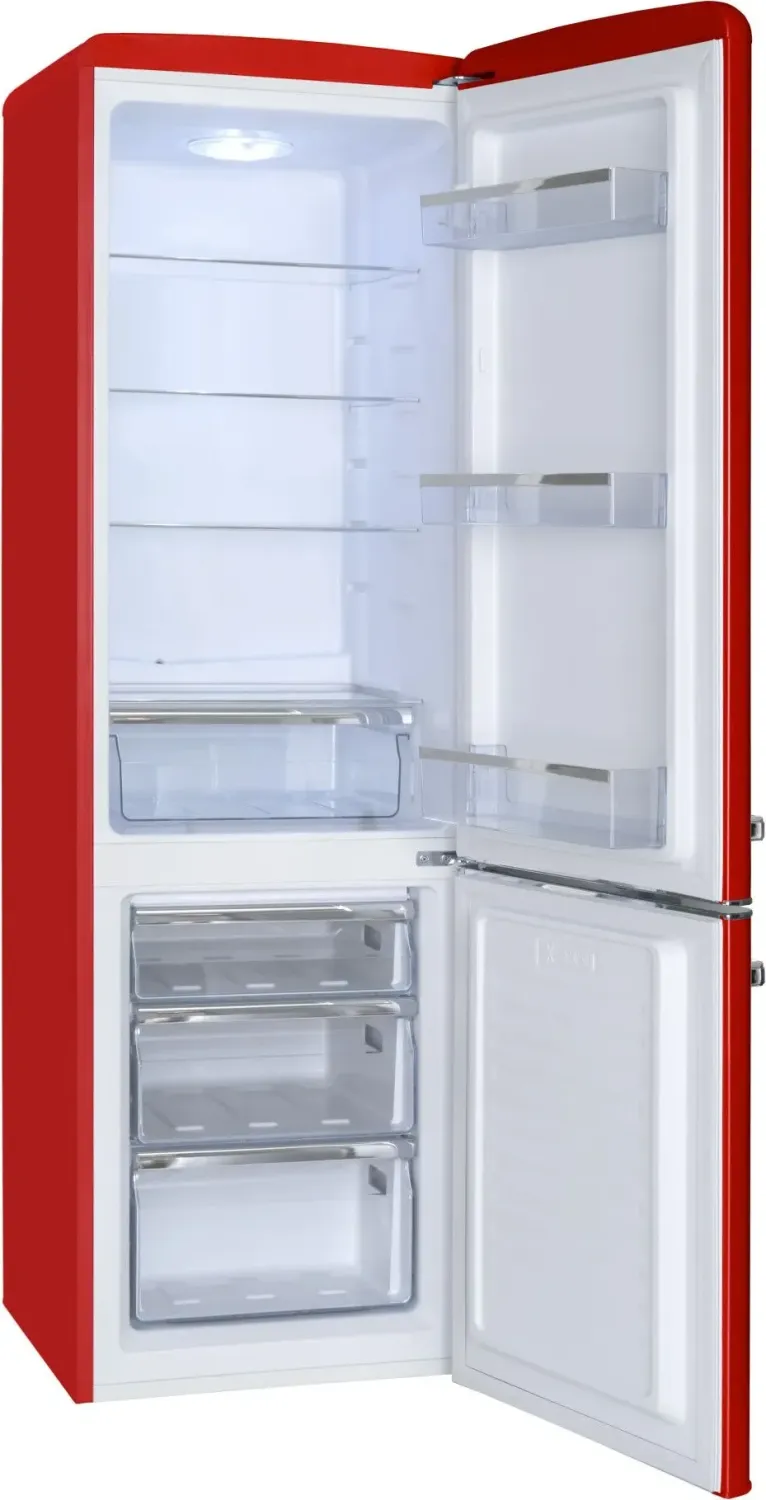
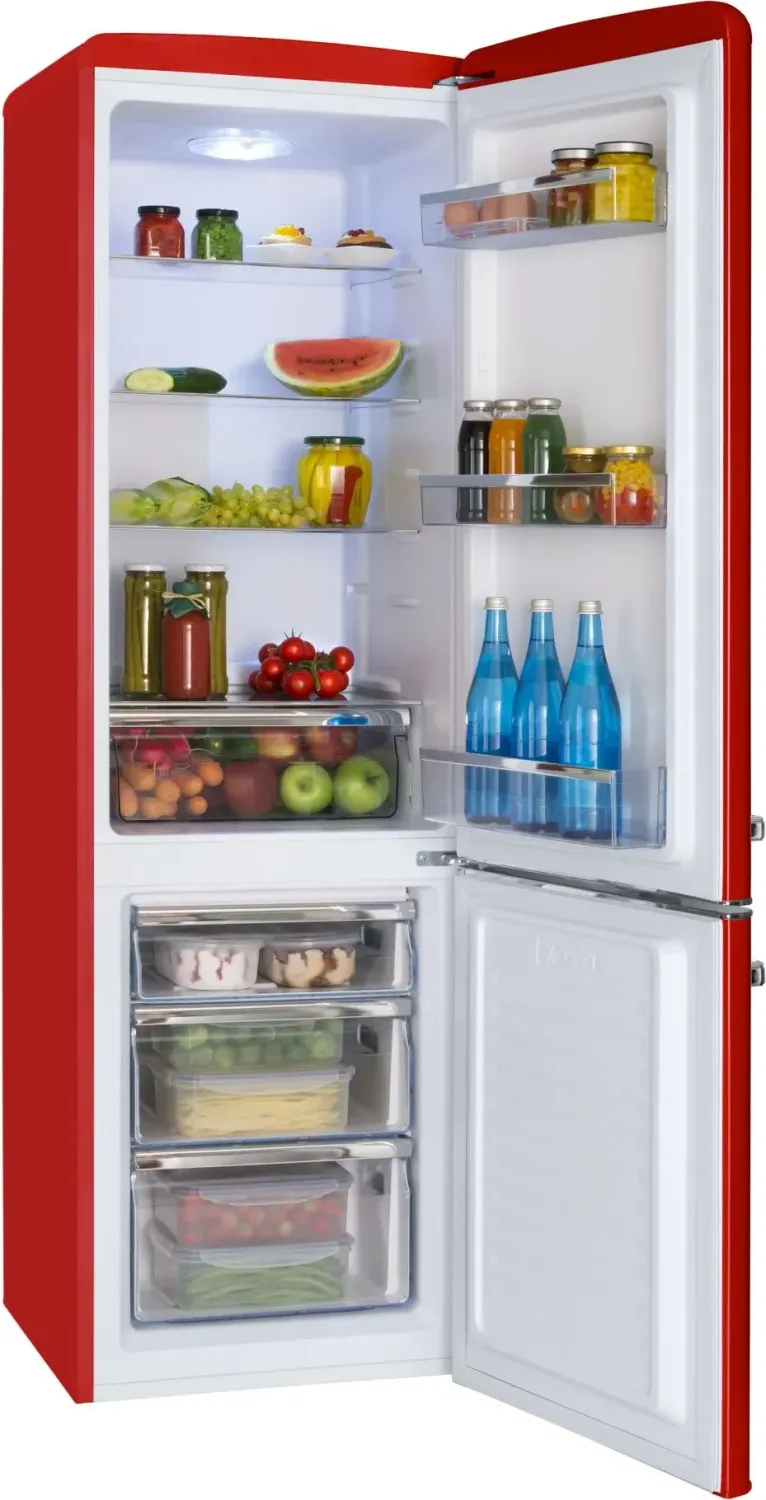
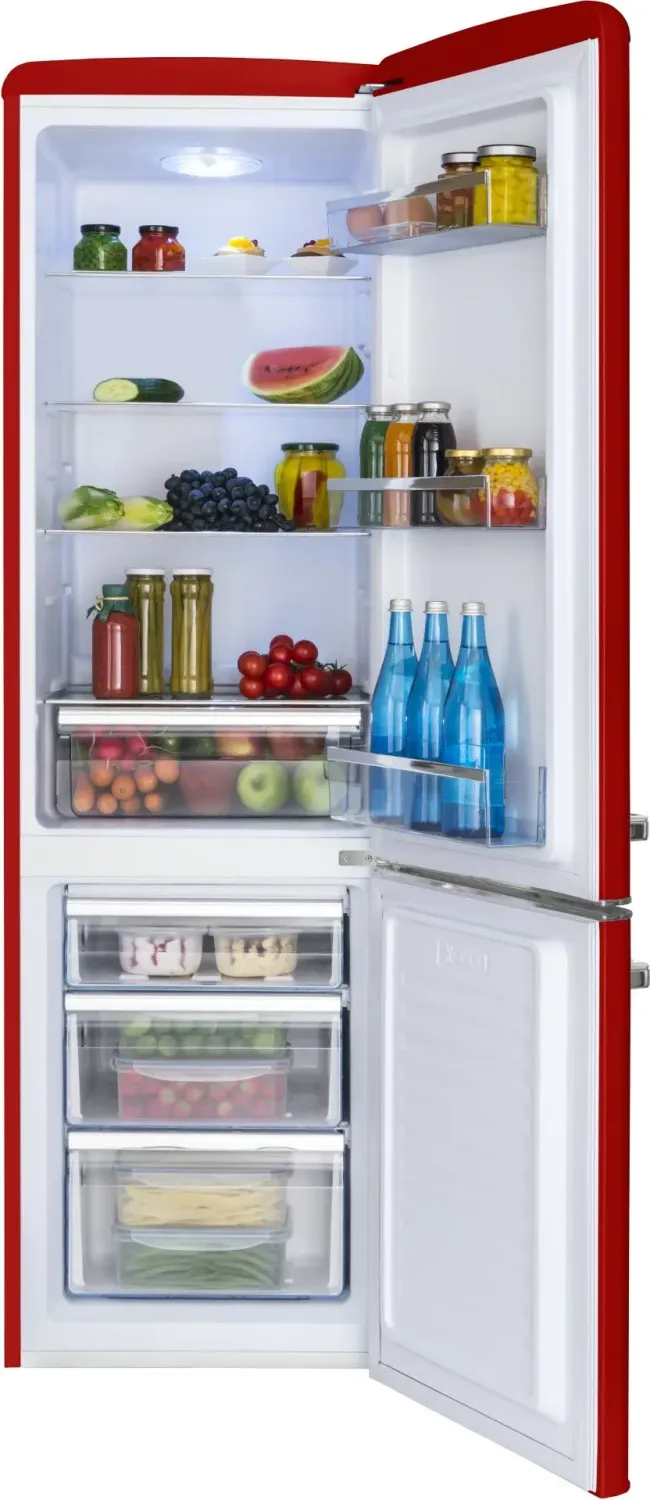
Amica KGCR 387 101 uses a simple rotary thermostat and internal lighting (E14 bulb or LED depending on build) for easy temperature control. Temperature settings range from a warm OFF/0 position to cooler settings up to 7; the mid-range is typically optimal for everyday use. The appliance offers clearly zoned storage: fridge shelves, vegetable drawers, multiple freezer drawers or wire shelves, and dedicated compartments rated by star symbols that indicate safe storage temperatures for different food types.
Freezing guidance clarifies packing, portioning, and recommended storage durations for meats, fish, vegetables and fruits to preserve taste and nutrition. The manual emphasizes using airtight, odorless packaging and avoiding glass for freezing. For models with frost-free technology, the freezer resists ice build-up, while conventional models include step-by-step manual defrosting and drainage instructions.
Installation and safety are straightforward: place the appliance on a level surface, maintain minimum clearances from heat sources, and ensure proper earthing and a dedicated 10A supply. The unit must not be tilted more than 40° during transport and should rest for at least 2 hours before use if tilted. Regular cleaning, periodic defrosting (when applicable), and gentle detergents are recommended to maintain hygiene and performance.
Operational tips cover efficient use: avoid exposing the appliance to direct heat or sunlight, keep vents clear, minimize door openings, and organize food by temperature zones for best preservation. Special notes include safe handling of refrigerant circuits, warnings against storing carbonated beverages in the freezer, and guidance on replacing the interior light with specified bulbs only.
Maintenance and support
Routine maintenance includes cleaning compartments and accessories, checking door gaskets, and unclogging condensate drains if needed. When faults arise, the manual provides troubleshooting steps for common symptoms—like temperature irregularities, unusual noises, and lighting failures—plus advice to contact authorized service for repairs to retain warranty protection. Spare parts availability follows EU regulations and product details can be found via the EPREL database.
Notes
- Observe the climate class range for optimal operation.
- Use the recommended bulb type (E14, 220–240V, max dimensions) for interior lighting.
- Do not attempt unauthorized repairs; always use qualified service to preserve safety and warranty.
- Keep children supervised and avoid letting them play with the appliance or its components.
Search for 67,732 Manuals online


Type-in Brand or Model