
Aerobie AeroPress Manual
PDF manual · 2 Pages
English



Quick check
Incorrect answer, please try again.
AeroPress Maintenance Schedule
Press out the coffee grounds immediately after brewing, before drinking the coffee.
Rinse or brush the rubber seal under running water. The brew chamber is cleaned during each pressing.
Push the plunger fully into the brew chamber for storage to keep pressure off the seal and extend its life.
Ask a Question
Do you recommend AeroPress?
Yes NoVideo Manual
how to make coffee with the aeropress
Frequently Asked Questions
Use fine drip grind for most AeroPress recipes and espresso grind for a richer, slower-pressing shot. For multiple servings prefer fine drip grind; if pressing feels hard, try a slightly coarser grind.
Is this answer helpful?
Aim for about 175°F (80°C) for medium and dark roasts and 185°F (85°C) for light roasts. Boiled water needs time to cool; a kettle thermometer or testing your instant hot water source helps achieve consistent brewing temps.
Is this answer helpful?
Eject the used coffee puck immediately after brewing, rinse the rubber seal, and wipe the chamber. Store with the plunger pushed all the way in to keep the seal from compressing. Top-shelf dishwasher use is optional.
Is this answer helpful?
Yes. Double or triple the coffee and water to press multiple servings (use fine drip grind). For lattes and cappuccinos, press a smaller volume and add milk or foamed milk to reach about 225 mL total beverage.
Is this answer helpful?
Hard pressing usually means the coffee puck is too compact or the grind is too fine. Press more gently and allow more time, or switch to a slightly coarser grind to restore flow and reduce resistance.
Is this answer helpful?
Independent tests show AeroPress coffee has caffeine comparable to drip coffee but significantly lower acidity—about one fifth of drip and one ninth of French press—making it gentler on the stomach.
Is this answer helpful?
No. The inverted method is less stable and increases the risk of tipping and burns. The standard upright method is safer and recommended by the manufacturer.
Is this answer helpful?
Advantages and Disadvantages
Advantages

- Fast brewing that yields a clean, low-acid cup ideal for sensitive stomachs.
- Highly versatile: makes espresso-style shots, Americanos, lattes, and cappuccinos.
- Compact, lightweight design great for travel and easy storage.
- Simple cleanup: eject grounds, rinse seal, and wipe or top-shelf dishwasher safe.
- Precise control of grind, water temperature, and steep time for customization.
Disadvantages

- Requires attention to grind size and water temperature to avoid under- or over-extraction.
- Pressing can be difficult with very fine or compacted grounds; needs patience.
- Not completely hands-off like an automatic drip machine—manual technique matters.
- Paper filters add recurring cost unless you rinse and reuse them carefully.
- Inverted brewing method discouraged due to instability and burn risk.
Product Specification
Brewing method
Full Immersion, French press (AeroPress)
Material
Plastic
Color
transparent
Lid
no
Product Description
Aerobie AeroPress Kaffeebereiter Manual
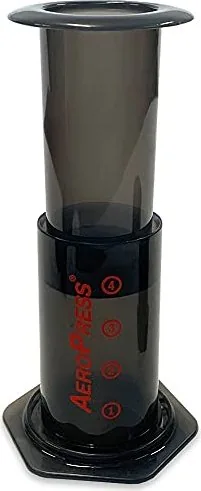
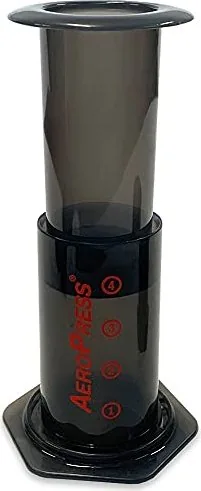
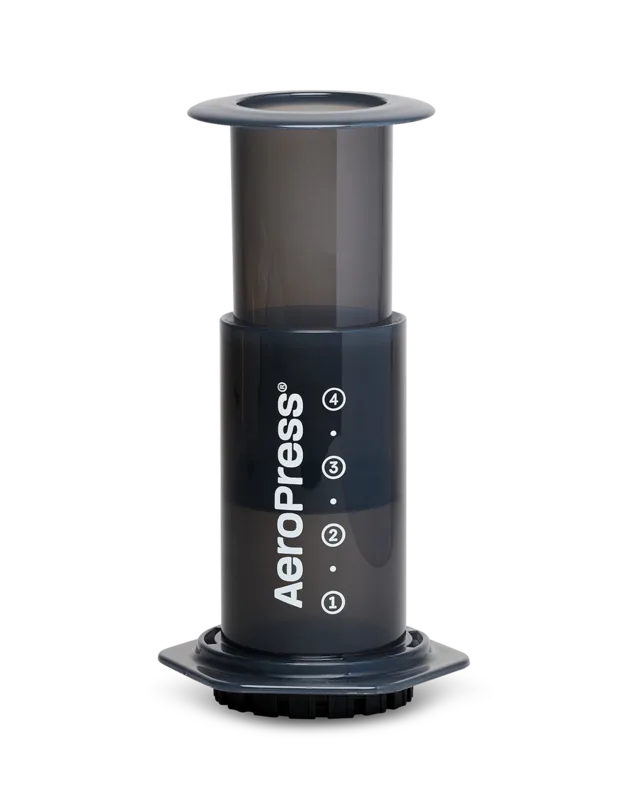
The Aerobie AeroPress Kaffeebereiter Manual is a compact, versatile coffee brewer designed for quick, clean, and flavorful cups. It uses a simple chamber-and-plunger design to make anything from concentrated espresso-style shots to full Americanos, lattes, and cappuccinos. Ideal for home, travel, or entertaining, the AeroPress emphasizes control: grind size, water temperature, and steep time are all adjustable so you can dial in your preferred taste.
The standard method calls for placing a paper filter in the cap, adding a scoop of fine drip or espresso grind coffee, pouring 175°F (80°C) water to the indicated level, stirring for 10 seconds, inserting the plunger, and pressing gently for 20–60 seconds. That measured, low-acidity extraction yields smooth coffee with reduced bitterness and less acidity than traditional drip or French press methods.
Recipes are flexible. Start with 1 heaping scoop of espresso grind or 1.5 level scoops of fine drip grind; increase coffee for a richer brew or double/triple the amounts to make multiple servings. Use 175°F for medium/dark roasts and 185°F for lighter roasts. For an Americano, press to the two-mark and top up to 225 mL. For lattes or cappuccinos, press a smaller batch and add milk or foamed milk to taste.
Cleaning and storage are effortless: eject the puck immediately after brewing, rinse the seal, and store the plunger pushed fully in to preserve the rubber seal. Filters can be rinsed and reused if desired. The unit is dishwasher-safe on the top shelf but typically only needs a wipe or quick rinse.
Practical tips include using slightly coarser grind or gentler pressing if the plunger is hard to push, and avoiding over-extraction by not forcing excessive water through the puck. For consistent temperatures, use a thermometer in the kettle or let boiled water cool to the recommended range. The inverted method is not recommended due to stability and burn risk.
Beyond everyday use, the AeroPress shines when entertaining: pre-press concentrated shots and quickly prepare guest drinks like Americanos, lattes, and cappuccinos. Independent testing shows AeroPress coffee has caffeine comparable to drip coffee and notably lower acidity, making it easier on the stomach.
Notes
- Always ensure the rubber seal is undamaged; replace if loose.
- Use a sturdy mug and press vertically to avoid spills and burns.
- Warranty: one year from purchase; keep your receipt.
Search for 67,706 Manuals online


Type-in Brand or Model