
Adafruit MAX9814/CMA-4544PF-W Manual
PDF manual · 14 Pages
English



Quick check
Incorrect answer, please try again.
Chat with your Adafruit MAX9814/CMA-4544PF-W manual using AI
Get instant AI answers from your Adafruit MAX9814/CMA-4544PF-W manual
Ask anything about the Adafruit MAX9814/CMA-4544PF-W. Answers come from this manual, with the pages they are based on.
Ask a Question
Do you recommend MAX9814/CMA-4544PF-W?
Yes NoFrequently Asked Questions
It amplifies microphone signals and automatically adjusts gain to reduce clipping and keep voice levels more even.
Is this answer helpful?
Yes. It includes a low-noise internal microphone bias around 2V, which works well with most electret condenser microphones.
Is this answer helpful?
Use the tri-level GAIN input to select 40 dB, 50 dB, or 60 dB depending on microphone sensitivity and source level.
Is this answer helpful?
Yes. Attack and release behavior depends on the external timing capacitor and the A/R setting, so you can favor speed or smoother sound.
Is this answer helpful?
It runs from 2.7 V to 5.5 V, which makes it convenient for many embedded and battery-powered projects.
Is this answer helpful?
Disable AGC when you want a fixed gain path or when your source already has controlled levels and you do not want compression.
Is this answer helpful?
Advantages and Disadvantages
Advantages

- Built-in AGC helps reduce clipping and keeps voice levels more consistent.
- Three gain settings make it easier to match different microphones and use cases.
- Low-noise mic bias and low distortion support cleaner audio output.
- Wide 2.7 V to 5.5 V supply range and shutdown mode fit portable projects.
Disadvantages

- AGC timing and threshold usually need external tuning for best results.
- Requires coupling capacitors and careful layout to perform well.
- Fast AGC settings can create pumping or breathing artifacts.
- Small TDFN package may be less convenient for manual soldering.
Product Specification
Manufacturer
Adafruit
Type
Microphone
Platform
Universal
Connectivity
5x Pin header/Solder points, I2C
Dimensions (WxD)
1.02x0.55in
Product Description
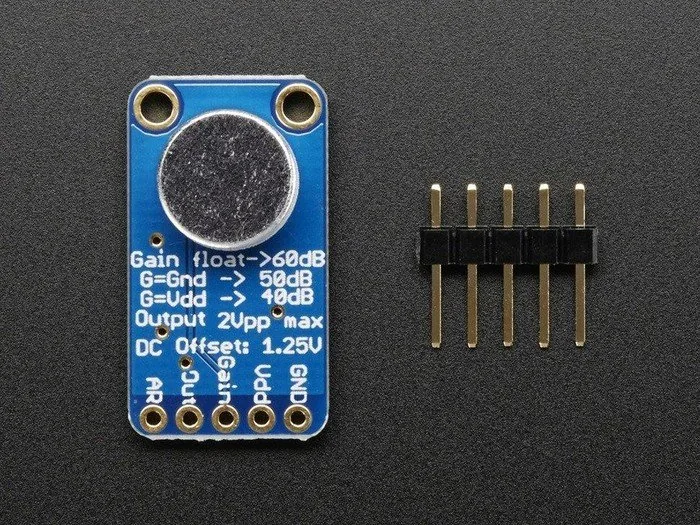
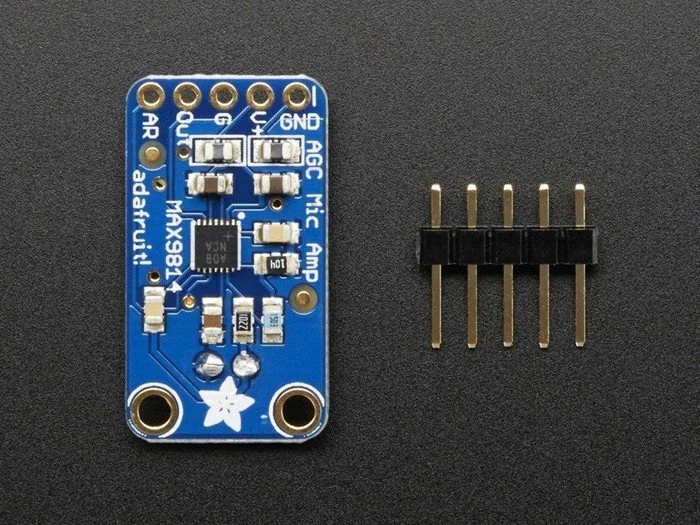
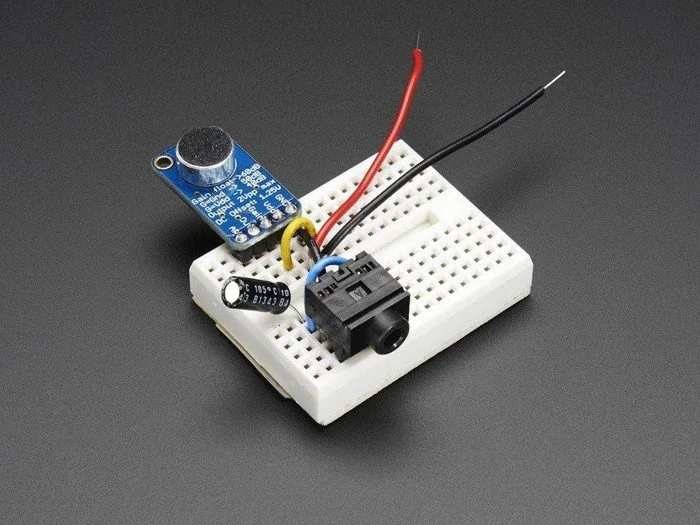
Adafruit Microphone with Automatic Gain Control MAX9814/CMA-4544PF-W Manual
Smart microphone amplification for cleaner recordings
The Adafruit microphone with automatic gain control MAX9814/CMA-4544PF-W Manual is a strong pick when you need a compact audio front end that behaves intelligently in real-world use. Instead of forcing every sound through a fixed boost, the MAX9814 adjusts gain on the fly, helping quiet speech stay audible while protecting the output from harsh clipping.
At its core, the design combines a low-noise preamp, a variable gain stage, and an output amplifier with built-in microphone bias. That means it is ready for common electret microphones and can deliver a usable signal across a wide range of sources. With selectable overall gains of 40 dB, 50 dB, or 60 dB, it suits everything from conversational voice capture to more demanding portable recording setups.
What makes this part especially practical is its automatic gain control behavior. The attack, hold, and release timing can be tuned with an external capacitor and logic input settings, so you can balance fast response against smoother sound. A short attack helps tame sudden peaks, while a slower release can keep the audio natural and avoid the pumping effect that often ruins aggressive AGC circuits. The threshold is also adjustable, giving you more control over when compression begins.
The chip operates from 2.7 V to 5.5 V, making it friendly to battery-powered builds and mixed-voltage systems. It also includes a low-power shutdown mode, low input-referred noise, and low distortion, which are all valuable when you care about clarity more than raw volume. In practice, that means cleaner voice prompts, better intercom audio, and more consistent results in headsets, cameras, and portable recorders.
For makers and product designers, this module is attractive because it reduces the amount of analog audio tuning needed upstream. Instead of fighting inconsistent microphone levels, you get a more predictable signal path and a microphone bias source already built in. If your project needs speech to stay intelligible in changing environments, this is a dependable, small-footprint solution.
Notes
- Use proper coupling capacitors to preserve low-frequency response.
- Keep the supply bypassed and place parts close to the device.
- Tune AGC timing for voice, music, or bursty sounds.
- Low-distortion capacitors can improve audio quality.
Search for 67,706 Manuals online


Type-in Brand or Model